Context in A View from the Bridge: What Students Need to Know
Early in A View from the Bridge, Catherine shows Eddie Carbone her new skirt. He tells her she looks beautiful, then starts to worry about how she walks down the street and who might be watching her. For Eddie, looking after Catherine includes having a say in how she presents herself outside the home. That exchange gives us an insight into the expectations of men, women and family life that a 1950s audience would have recognised.
In the Edexcel IGCSE English Literature Paper 2, Section A, you are assessed on your understanding of the play (AO1) and your analysis of language, form and structure (AO2). Only use context briefly when it helps explain a detail you are analysing. For examples of how the questions are framed, and to practise writing outlines and essays: see the A View from the Bridge past exam questions.
Masculinity, family authority and paid work
The male breadwinner was an influential ideal in mid-century America. A man who earned the household wage was expected to take responsibility for his family’s welfare, and that role often gave him authority over family decisions. Similarly, Eddie expects Catherine to consult him about her own future. His opinions on how men should behave also affect how he sees Rodolpho, whose singing, cooking and sewing give Eddie grounds to question his masculinity.
Women’s paid work was also part of everyday life. The 1950 US census found that almost half of single women of working age were working or looking for work. Typing, secretarial work and retail were among the most common occupations for women. Catherine’s offer of a job as a stenographer fits that picture. It gives her the chance to earn her own wage at a point when Eddie still expects to have a say in her choices. Learn more about the themes in A View from the Bridge in this post.
Red Hook and work on the docks
Eddie earns his living as a longshoreman in Red Hook, a Brooklyn neighbourhood that grew around its waterfront. Its docks and warehouses drew workers from immigrant communities, including people from Italy and Ireland. Longshoremen loaded and unloaded ships, moved goods packed in crates, sacks and barrels. Many lived near the waterfront, so men who worked together were often neighbours as well.
Getting work each day could be uncertain. In the early 1950s, men on the New York waterfront would gather at the pier to wait for a foreman to choose a crew. This system, known as the shape-up, gave foremen considerable power. Some demanded a share of a worker’s wages in exchange for a job. In 1953, New York and New Jersey created the Waterfront Commission to tackle corruption and regulate hiring.
Italian immigration after the Second World War
Italian communities in New York were already well established by the 1950s. Large numbers had arrived around the turn of the century. In some parts of the city, people from the same Italian village settled on the same street or even in the same building. For later arrivals, ready communities like these gave them contacts turn to as soon as they reached New York.
People continued to leave Italy in search of work after the Second World War. The United States kept the national-origins quota system it had introduced in 1924. The 1952 immigration law retained annual limits that favoured northern and western European countries over countries such as Italy. For people who entered without authorisation, discovery could mean deportation. The word submarines, used in the play for undocumented arrivals, captures the need to keep out of sight even while earning a living.
Work and the American Dream
The American Dream is the idea that people can improve their lives through work and opportunity. For someone who moved abroad to earn money, the benefits of that work could reach well beyond the place where they migrated to. Money sent home, known as remittances, could help a family pay for daily necessities. For others, moving offered the chance to settle in a new country.
Both aims are present in the play. Marco hopes to send money to his wife and children in Italy, while Rodolpho wants to make a life in the United States. The same move offers one brother a way to support his family in Italy and the other the prospect of a new home.
Family loyalty and the cost of betrayal
Offering a relative a place to stay could involve taking responsibility for what happened to them while they lived under your roof. In a household sheltering someone without papers, that responsibility could extend to keeping their presence secret. In the Red Hook of the play, telling the authorities about someone your family has taken in is the ultimate act of betrayal.
The story of Vinny Bolzano shows how seriously the characters take that obligation. After he reports his uncle to Immigration, his family and neighbours turn against him. The official consequences fall on the person reported. The neighbourhood’s judgement falls on the person who supplied the information.
Arthur Miller and the pressure to name others
Miller’s interest in the Brooklyn waterfront began before he wrote A View from the Bridge. He learned about Pete Panto, a longshoreman who challenged corruption on the docks, and heard the story of a dockworker who reported relatives to the immigration authorities. The play was first performed as a single act in 1955. A revised two-act version followed in London in 1956 keeping largely to the same plot.
During the same period, congressional investigations into communism put pressure on witnesses to identify other people. In 1956, Miller appeared before the House Un-American Activities Committee and refused to identify others who had attended meetings with him. His conviction for contempt of Congress was overturned in 1958. The first production came before his testimony. The hearings help explain why the decision to give someone’s name to the authorities would have had particular resonance for an American audience in the 1950s.
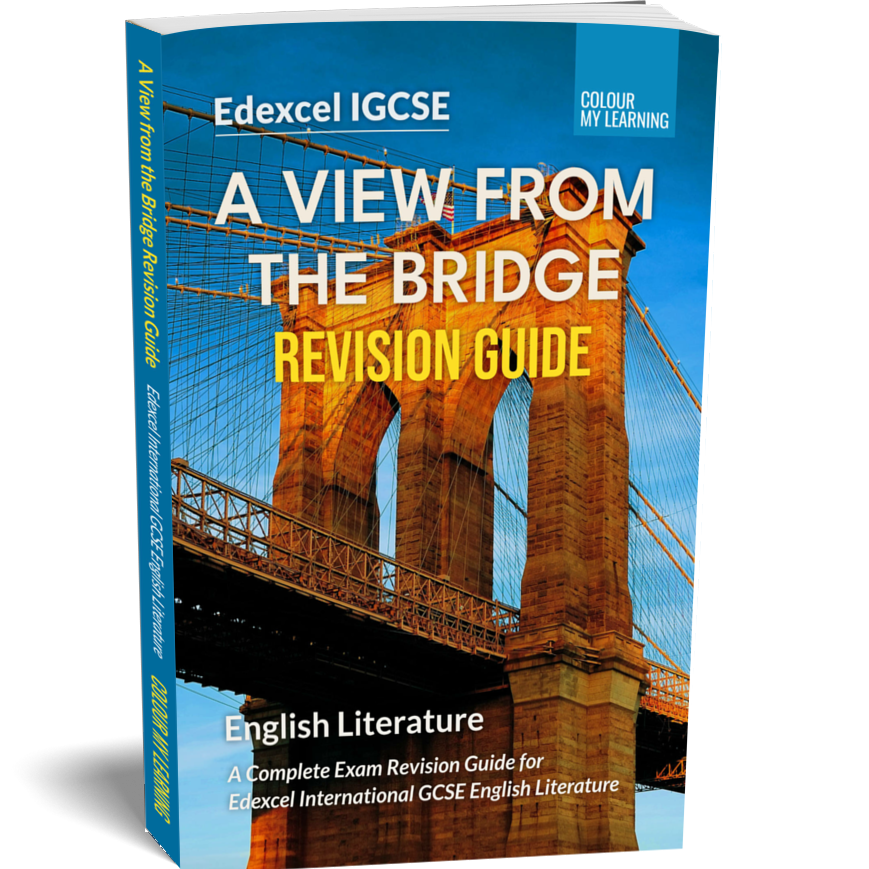
Revise A View from the Bridge with the complete revision guide
Essential Literature: A View from the Bridge brings together everything you need for Edexcel International GCSE English Literature, including characters, relationships, themes, symbolism, dramatic methods, key quotations, essay planning and exam practice.