Main Themes in Kindertransport
Diane Samuels’ Kindertransport centres on the enduring effects of separation. Eva’s journey from Germany to England defines her identity, her memories and her relationships throughout the play. These experiences also affect Faith, who grows up not knowing her full family history.
The themes in the play are closely connected. Separation leads to loss. Loss influences Eva’s sense of identity. Hidden memories create secrecy within the family. Survival brings guilt and unresolved feelings. Understanding these links will help you respond flexibly to a wide range of exam questions.
For practice, use our full collection of Kindertransport past exam questions. The questions show how Edexcel may approach the same ideas through a theme, a character, a relationship or a dramatic method.
Separation and loss
What does the theme mean?
Separation begins when Helga and Werner send Eva away from Germany on the Kindertransport. Eva loses daily contact with her parents, her home, her language and the familiar world of her childhood. The effects continue long after the original journey. As an adult, Evelyn carries anger and grief connected to the decision that saved her life.
Where do we see it?
At the beginning of the play, Helga prepares Eva to manage without her parents. She teaches her to sew on a button and tells her: “You have to be able to manage on your own.” The practical lesson prepares Eva for the independence she will need in England. The phrase “on your own” also captures the emotional isolation ahead.
Separation occurs again after Eva arrives in England. Lil tries to send her away for her own safety, but Eva manages to escape from the train back to Lil. After the war, Helga arrives in England hoping to convince Evelyn to travel to the US with her. However, years apart have changed their relationship. Eva has become Evelyn and has built a new life with Lil. Their reunion brings back the pain of the original separation.
The Kindertransport Plot Summary: Key Events and Time Shifts gives a clear overview of these stages in Eva’s life.
Why does it matter in the exam?
Questions may focus on:
- Helga’s decision to send Eva away
- the journey on the Kindertransport
- the effects of losing her parents
- different kinds of separation
- loss and abandonment
- the emotional cost of survival
A strong response should trace the theme across the play. You could begin with Eva’s departure, move to her life with Lil and finish with the adult Evelyn’s relationships with Helga and Faith.
Identity and belonging
What does the theme mean?
Eva arrives in England as a German Jewish child. Her name, language, religion and family history form part of her identity.
As she grows older, she adapts to life in Britain. She speaks English, becomes part of Lil’s family and changes her name to Evelyn. Her sense of belonging develops through these changes. Her past remains part of her, even though she tries to keep it hidden from Faith.
Where do we see it?
Eva’s early experiences in England show the cultural differences she must navigate. She struggles with English, questions Lil’s food and customs, and wants to maintain the religious practices taught by her parents. Over time, these parts of her childhood become muted. She changes her name and birthday and becomes an English citizen.
When Helga returns, Evelyn struggles to speak German and sees England as her home. The contrast between Eva and Evelyn allows the audience to see how much her identity has changed.
Faith’s discovery in the attic also affects her own sense of identity. She learns that her mother was born in Germany, came from a Jewish family and had another mother before Lil.
Why does it matter in the exam?
Questions may focus on:
- Eva becoming Evelyn
- cultural differences
- adaptation and change
- home and belonging
- displacement
- Faith’s discovery of her family background
- the adult Evelyn
When writing about identity, choose moments from both childhood and adulthood. This will help you show development across the play.
The Main Characters in Kindertransport article will also examine how Eva’s development shapes the adult Evelyn.
Memory and secrecy
What does the theme mean?
Memory links the past to the present throughout Kindertransport. Evelyn has stored letters, photographs, toys and religious objects in the attic. She has also kept the story of her childhood from Faith. Her silence is a result of trauma, fear and her desire to bury painful memories. Faith’s discovery of Eva’s belongings and letters brings the hidden past back into the family’s present.
Where do we see it?
The attic contains the physical evidence of Evelyn’s earlier life. Faith finds the Ratcatcher book, photographs and letters from Eva’s parents. Each object reveals part of the family history. Evelyn reacts strongly when Faith asks questions. She tears up papers and tries to end the conversation. Her behaviour shows how painful these memories remain.
Samuels uses time shifts between past and present to place Eva’s experiences alongside Evelyn’s adult life. The audience is able to see Evelyn’s childhood memories taking shape on stage.
The Ratcatcher also returns throughout the play. His presence gives visible form to Evelyn’s fear and guilt.
These dramatic methods are explained further in Symbolism in Kindertransport: The Ratcatcher, Attic and Objects and Language, Form and Structure in Kindertransport.
Why does it matter in the exam?
Questions may focus on:
- memory
- secrecy
- truth
- the past
- the attic
- hidden family history
- guilt
- the relationship between Evelyn and Faith
A strong response should include Samuels’ use of stagecraft. The attic, props, time shifts and the Ratcatcher all help to present memory as an active force within the play.
Family and motherhood
What does the theme mean?
The play presents several generations of mothers and daughters:
- Helga and Eva
- Lil and Eva/Evelyn
- Evelyn and Faith
- Lil and Faith
Each relationship involves care, protection and responsibility. The characters express these qualities in different ways.
Helga sends Eva away to save her. Lil gives Eva a home in England. Evelyn tries to protect herself and Faith by keeping the past private. Faith seeks the truth about her family heritage.
Where do we see it?
Helga prepares Eva carefully for her journey. She packs her case, hides jewellery in her shoes and promises that the family will soon be reunited. Lil offers Eva food, shelter and practical support. She helps her write letters and look for ways to bring her parents to Britain. Over time, Lil assumes the role of Eva’s English mother.
Evelyn’s relationship with Faith carries the effects of her childhood. She finds it difficult to discuss emotion and family history. Faith feels excluded from an important part of her own identity. Lil’s relationship with Faith is also important. Faith turns to her grandmother for answers, and Lil reveals the truth about Eva.
Why does it matter in the exam?
Questions may focus on:
- mothers and daughters
- Helga as a mother
- Lil and Helga
- Evelyn as a mother
- Faith as a daughter
- family relationships
- protection and responsibility
- love and sacrifice
When comparing mothers, consider their circumstances, choices and effects on their children. The Key Relationships in Kindertransport article will explore these connections in greater detail.
Survival and guilt
What does the theme mean?
Eva survives because her parents send her away. Her survival defines the rest of her life. She grows up in safety, with education and a family in England. She also carries grief, anger and guilt. Her parents suffered after she left, and her father died in a concentration camp. Her mother survived and returned to find a daughter who had changed.
The play shows how survival can continue to affect a person long after physical danger has passed.
Where do we see it?
Helga presents children as the future of their families: “Through our children we live.”
Eva’s survival carries her parents’ hopes forward. Her adult life also reveals the emotional consequences of that survival.
When Helga returns, Evelyn feels torn between her birth mother and the life she has built with Lil. She tells Helga: “I never wanted to live without you and you made me…”
The unfinished sentence conveys the depth of Evelyn’s feelings. She has lived because Helga sent her away, yet the experience has cemented her anger towards her mother. Guilt also influences the next generation as Faith inherits the effects of a history that was kept from her.
Why does it matter in the exam?
Questions may focus on:
- survival
- guilt
- gratitude
- abandonment
- Helga’s intentions
- Eva’s feelings towards her parents
- the effects of the past
- the emotional consequences of the Kindertransport
Strong responses should consider several stages of Eva/Evelyn’s life. This gives a fuller picture of how survival influences her identity and relationships.
How the themes connect
The main themes of Kindertransport work together throughout the play. Eva’s separation from her parents leads to loss and displacement. Her new life in England changes her identity and sense of belonging. Her memories remain stored in the attic and hidden from Faith. The secrecy affects her family relationships. Her survival leaves guilt and emotional pain that continue into adulthood.
These connections are useful in the exam. A question on identity may involve separation and memory. While question on motherhood may involve protection, survival and guilt. Similarly a question on the attic may lead to secrecy, family history and the relationship between Evelyn and Faith.
Write your answer around the exact wording of the question, then draw on the connected themes that strengthen your argument.
Quick revision checklist
Before practising a theme question, make sure you can:
- explain the theme in your own words
- identify three relevant moments from across the play
- connect the theme to key characters and relationships
- select one or two useful quotations
- discuss a dramatic method used by Samuels
- explain how the theme develops
- link each point to the wording of the question
Use our Essential Quotes from Kindertransport resource to choose flexible evidence and our guide to How to Write a Strong Kindertransport Essay for Edexcel IGCSE to develop your response.
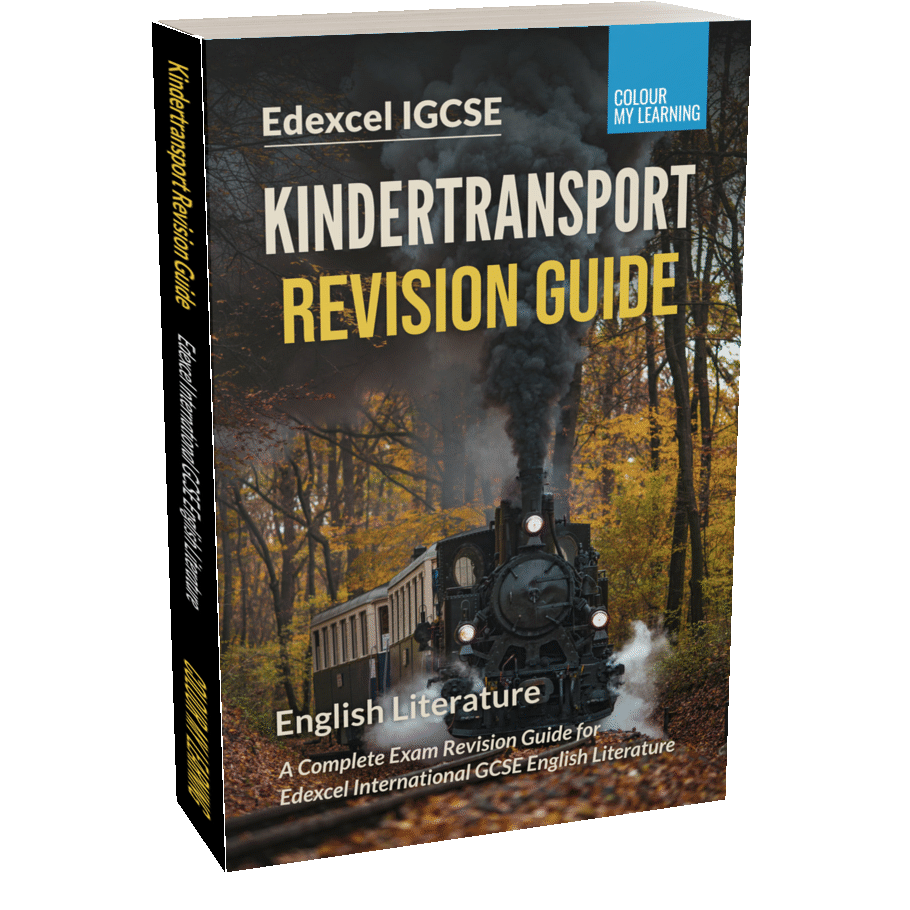
Revise Kindertransport with the complete revision guide
Essential Literature: Kindertransport brings together everything you need for Edexcel International GCSE English Literature, including characters, relationships, themes, symbolism, dramatic methods, key quotations, essay planning and exam practice.